A six-story mixed-use building on Phillips Avenue faced a familiar Sioux Falls challenge: the upper soils were expansive clay, but refusal depth varied dramatically across the lot. The structural team needed a pile foundation design that could handle differential movement without overrunning the construction budget. That is exactly the kind of problem we solve here. With ASTM D1586 subsurface data and regional expertise in the Big Sioux River basin, we develop pile designs that work with the actual soil profile, not against it. For sites where shallow test pits reveal fill or organics in the upper five feet, we correlate findings with deeper borings to avoid unpleasant surprises during pile installation. The Sioux Falls market demands practical, code-compliant solutions, and our approach reflects years of delivering just that for developers, municipalities, and industrial clients across Minnehaha County.
In Sioux Falls, pile refusal on quartzite can happen at 15 feet or 50 feet — designing without subsurface verification is gambling, not engineering.
How we work
Local ground factors
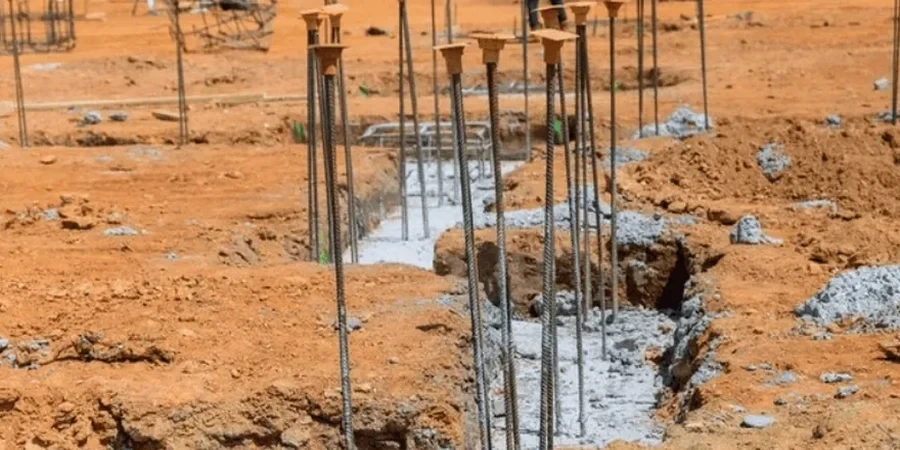
Around Sioux Falls, we observe that the biggest risk is not the pile itself but the interface between the pile cap and the moving near-surface soil. Expansive clays in the upper ten feet can heave and shrink seasonally, applying uplift forces that were never accounted for in the structural model. If the pile designer ignores the void form requirement or skimps on reinforcement at the cap connection, you will see cracking in grade beams within the first three freeze-thaw cycles. Another local hazard is boulders within the glacial drift: a pile driven to a predetermined length can meet refusal prematurely on a granite erratic, leaving the tip unseated in competent material. Our pile designs include contingency language for variable refusal depth and specify dynamic testing to confirm bearing on rock, so the contractor is never left guessing.
Relevant standards
IBC 2021 (International Building Code), ASCE 7-22 Minimum Design Loads for Buildings, ASTM D1586 Standard Test Method for SPT, ASTM D2487 Classification of Soils, AISC 360 Specification for Structural Steel Buildings, FHWA-NHI-16-010 Drilled Shaft Manual
Other technical services
Deep Foundation Design and Analysis
Complete pile foundation design packages including axial and lateral capacity, group effects, settlement analysis, and pile cap design. We handle driven piles, drilled shafts, and micropiles for commercial buildings, bridges, and industrial structures across eastern South Dakota.
Pile Testing and Verification
High-strain dynamic testing using Pile Driving Analyzer equipment, CAPWAP signal matching, and cross-hole sonic logging for drilled shafts. We carry out independent verification that installed piles meet the design capacity and integrity requirements before structural load transfer.
Typical parameters
Common questions
What factors most influence pile foundation design cost in Sioux Falls?
The primary cost drivers are pile type and length, site access constraints, and the depth to competent bearing stratum. In Sioux Falls, where Sioux Quartzite bedrock can be encountered anywhere from 15 to 60 feet below grade, a deeper rock socket will increase material and installation time. Typical design and testing packages for a commercial building range from US$1,540 to US$5,930 depending on the number of piles, required load tests, and whether dynamic monitoring during driving is specified. We carry out a detailed scope and fee proposal after reviewing the geotechnical report.
How do expansive soils in Sioux Falls affect pile foundation design?
The expansive clays common in the upper soil profile around Sioux Falls can generate significant uplift forces through skin friction along the pile shaft and heave pressure beneath pile caps. Our designs address this by isolating the cap from the expansive zone using void forms or carton forms, specifying a minimum pile embedment below the active moisture zone, and checking the structural connection for uplift. We reference local USDA soil survey data and site-specific Atterberg limits to quantify the expansion potential before finalizing the pile geometry.
What testing is required to verify pile capacity and integrity?
The IBC and local jurisdiction typically require either static load testing or high-strain dynamic testing (PDA) on a representative number of production piles, often combined with CAPWAP analysis to confirm capacity and soil resistance distribution. For drilled shafts, cross-hole sonic logging or thermal integrity profiling is common. Our team writes the testing specification as part of the design package, coordinates with the testing subcontractor during installation, and reviews results to confirm that the as-built foundation meets or exceeds the design requirements.