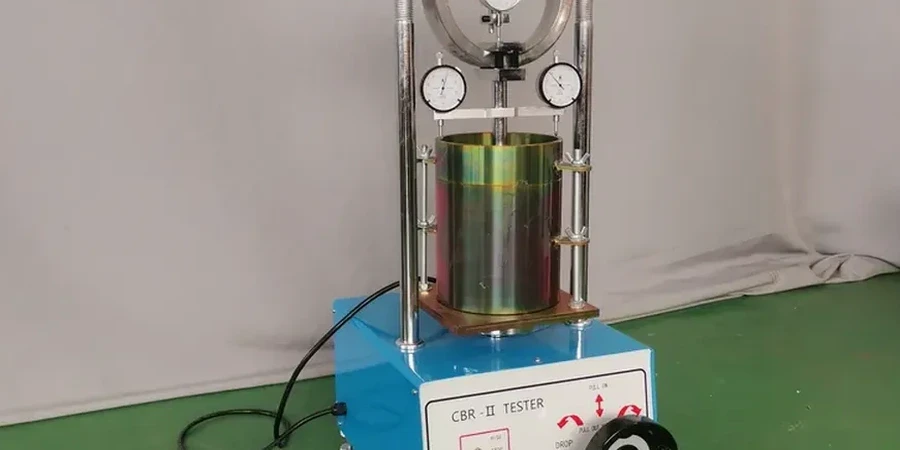
The most expensive mistake in pavement design around Sioux Falls is guessing the subgrade strength. We see it often: a contractor assumes a generic CBR value, skips the lab, and within two seasons the asphalt shows rutting and alligator cracking. The culprit is usually the fat clay deposits common across the Big Sioux River valley. A soaked laboratory CBR test under ASTM D1883 gives you the real number—not an estimate—before you place aggregate or pour concrete. Our lab on the east side of town runs these tests weekly for local engineering firms and county road departments who need defensible data for their pavement thickness designs. You can also pair it with a grain-size analysis to build the full soil profile required by the South Dakota DOT.
A soaked CBR value at 95% compaction is the only number that matters for Sioux Falls pavement design.
How we work
Local ground factors
Sioux Falls grew fast after the interstate system connected it in the 1960s, and much of the commercial development spread over farmland with undocumented fill and high-plasticity clays. Pavement sections designed without local CBR data tend to fail early—rutting appears in the wheel paths after two or three freeze-thaw cycles. The cost to mill and replace a failed parking lot or industrial access road runs far higher than the cost of a single soaked CBR test. For any project within city limits, the Public Works Department expects subgrade characterization in the permit package, and a lab report with ASTM D1883 data satisfies that requirement without delay.
Video resource
Relevant standards
ASTM D1883, ASTM D698 / D1557, AASHTO T 193
Other technical services
Soaked CBR Testing
Standard three-point compaction with four-day soak. Includes swell measurement and penetration curves. Most requested by local civil engineers for road and parking lot design.
Modified Proctor (ASTM D1557)
Determines the moisture-density relationship for the subgrade or base material. We run this alongside the CBR so the compaction specification is tied directly to the strength result.
Subgrade Soil Classification
Full characterization suite: grain-size, Atterberg limits, and organic content. Required by the South Dakota DOT before CBR values can be used in pavement thickness design.
Typical parameters
Common questions
What does a laboratory CBR test cost in Sioux Falls?
For a standard soaked CBR with three compaction points, the fee ranges from US$120 to US$220 depending on the number of samples and whether a Proctor is included. We quote a firm price before starting.
Why does the sample need to be soaked for four days?
The four-day soak in ASTM D1883 simulates the worst moisture condition the subgrade will see over the pavement's life—typically during spring thaw when the frost layer melts and water has nowhere to drain. The soaked CBR value is always lower than the unsoaked value, and using the soaked number prevents underdesign.
How much material do I need to send for a CBR test?
We need about 50 lbs of disturbed soil per sample if we run the Proctor in-house. If you already have the optimum moisture and maximum dry density from a prior test, 30 lbs is sufficient. The material should be bagged and sealed immediately after excavation to preserve field moisture.