Sioux Falls sits on a complex glacial landscape carved by the last ice age. The Big Sioux River and its tributary Skunk Creek have deposited layers of silty clay, sand, and gravel across the metro area, creating highly variable geotechnical conditions. A professional soil mechanics study here isn't just a code requirement under IBC Chapter 18. It's the tool that reveals whether your building pad rests on stable glacial till or compressible alluvium. With the city's rapid expansion east of Interstate 229, many new subdivisions encounter expansive clay lenses that swell when wet. These soils can exert uplift pressures exceeding 5,000 psf, enough to crack a slab-on-grade foundation. Our team combines in-situ permeability testing with advanced laboratory consolidation to map these reactive zones before excavation starts, saving owners from costly structural repairs down the road.
Sioux Falls' glacial history left behind soil profiles that can shift radically within 100 feet—our study maps that hidden variability before you break ground.
How we work
Local ground factors
A contractor recently broke ground on a three-story medical office near the Sanford USD Medical Center complex. The preliminary site plan assumed 4,000 psf bearing capacity based on a previous report two blocks away. But our soil mechanics study revealed a buried channel of soft, organic silt at 12 feet depth directly under the proposed elevator pit. That lens, if undetected, would have led to differential settlement exceeding 1.5 inches, cracking the elevator shaft walls and misaligning the rails. The fix involved over-excavating the organic material and backfilling with compacted crushed stone, a $45,000 change order caught during design instead of a $350,000 remediation after failure. Sioux Falls' patchwork of old river channels, especially in the central core and along the bike trail, makes these surprises common. Without a site-specific investigation, you're betting your foundation on geology you cannot see.
Relevant standards
ASTM D1586: Standard Test Method for Standard Penetration Test (SPT) and Split-Barrel Sampling of Soils, ASTM D2487: Standard Practice for Classification of Soils for Engineering Purposes (Unified Soil Classification System), IBC Chapter 18: Soils and Foundations (adopted by City of Sioux Falls)
Other technical services
Subsurface Exploration Program
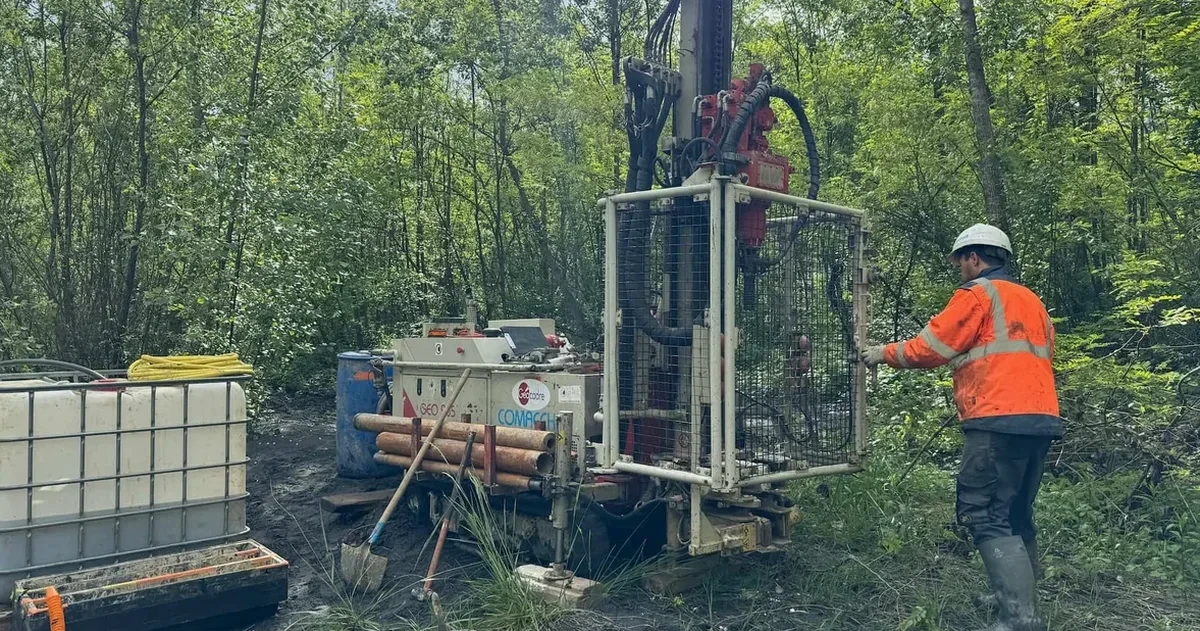
Mobilizing drill rigs and excavators to perform borings and test pits, logging glacial till, alluvium, and weathered shale per ASTM standards. We install piezometers to track the Big Sioux aquifer's seasonal fluctuations.
Geotechnical Laboratory Testing
Running Atterberg limits, sieve analyses, triaxial compression, and consolidation tests on undisturbed samples. Our lab certifies shear strength and compressibility parameters for shallow and deep foundation design.
Foundation Analysis and Reporting
Calculating allowable bearing capacity, immediate and consolidation settlement, and lateral earth pressures. Each report includes specific recommendations for footings, mats, or piles per IBC Chapter 18 and ASCE 7.
Typical parameters
Common questions
What does a soil mechanics study cost for a typical commercial lot in Sioux Falls?
For a standard commercial parcel under 2 acres in Sioux Falls, expect a fee between US$2,940 and US$5,880. The final number depends on the number of borings, depth to bedrock, and lab testing scope. A site near the Big Sioux River floodplain requiring settlement analysis of soft clays will trend toward the upper end.
How deep do you drill for soil borings in Sioux Falls?
Drilling depth follows the IBC and generally extends to the point where added stress is less than 10% of the existing overburden pressure. In Sioux Falls, this typically means 25 to 40 feet for a two-story structure, though sites east of town on shallow bedrock may stop at 15 feet if Sioux Quartzite is encountered.
Why is expansive clay a concern in this area?
Sioux Falls lies near the western edge of the Des Moines Lobe glacial advance, which left behind clay-rich tills containing smectite minerals. These clays can swell by 10% or more when they absorb water from snowmelt or irrigation, creating uplift forces that damage lightly-loaded slabs and pavements.
Do you provide recommendations for both shallow and deep foundations?
Yes. Our reports evaluate shallow footings first, providing allowable bearing pressures and settlement estimates. If the upper soils are too compressible or the loads too high, we design deep foundation alternatives such as drilled piers or driven piles, including skin friction and end bearing calculations.
How soon can I get the geotechnical report after drilling?
Fieldwork and lab testing typically wrap up within 10 to 14 business days. You'll receive the final signed report, stamped by a licensed professional engineer, within three weeks of drill rig mobilization, assuming standard consolidation and shear testing timelines.